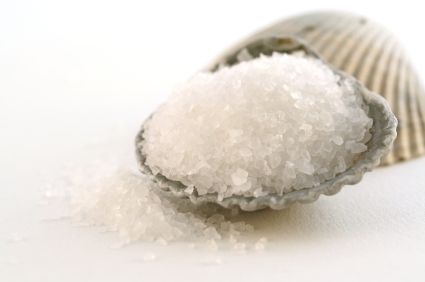
 "Salt is salt" most people would say, and for most people this is probably true. However, for foodies with discriminating palates, they will tell you that there is salt and there is salt. All you have to do is look in gourmet magazines and foodie blogs and you will find out the vast array of salt varieties now available.
So what's the difference? Some will tell you that the taste is purer in sea salts compared to regular table salt. Really, that is the main reason foodies lean towards sea salts, the taste. But now some people are leaning towards a sea salt diet because of the claim that some sea salts have a lower amount of sodium than regular table salt; making it healthier for you. All you have to do is perform a quick search on the sea salt health benefits online and you will glean a ton of information, some you probably have never even heard of before. As one who has hyper-tension, I am repeatedly advised by my doctors to cut down on the salt; but aside from carbs, salt is my second largest addiction. I just can't do without it! So I reduce my salt intake, but I can never totally live without it.
So, I cut down on the amount of salt I use for cooking. But wouldn't it be great to not have to sacrifice the taste of salt if we are assured that it doesn't have as much of the health impairing component, sodium? Another quick online search will give you sea salt food recipes that will enhance and showcase the taste of food instead of overpowering them. I am surprised when I run across recipes that practically blanket food with sea salt only to learn that the salt used makes little difference in the amount of sodium in the dish. Some sea salts boast over 50% less sodium than regular table salt! That is surprising to me!
 Nothing says the holidays better than cinnamon. When you catch a whiff of this fragrant spice, you are instantly transported to a holiday wonderland. It was the spice of nobility and gods of old and now it is a spice that no kitchen should be without.
It is most commonly used and recognized in its powdered form but it is actually a bark from an evergreen tree native to Sri Lanka, Cinnamomum verum. This spice is widely used in baking here in the west. In the east, it is not uncommon to use cinnamon in savory dishes like the beef rendang we cooked up recently.
10 Benefits of Cinnamon:
- Lowers LDL Cholesterol
- Good for Diabetes - helps regulate blood sugar levels
- Yeast Infections - stops some medication resistant strains
- Reduces Cancer Cells - studies show cinnamon to reduce the growth of leukemia and lymphoma cancer cells
- Relieves Indigestion - a dash of cinnamon powder with two tablespoons of honey taken before eating relieves acidity and digests the heaviest of meals
- Anti-coagulant - prevents blood from clotting
- Pain Relief - some studies have shown that cinnamon combined with honey relieved some arthritis pain
- Food Preservative - cinnamon inhibits bacterial growth
- Improves Cognitive Function and Memory - the scent of cinnamon is said to awaken the senses
- Resists E.Coli - some studies have shown that cinnamon is resistant to the e. coli bacteria in unpasteurized juices
- Source of manganese, fiber, iron, and calcium
To have a festive smelling house, simply boil a stick of cinnamon in water.
Visit our new blogs:
Amoores.com
Cooked from the Heart - our new food blog
Our New Backyard - garden & photo blog
Found Not Lost - about all the things we 'find' worth talking about
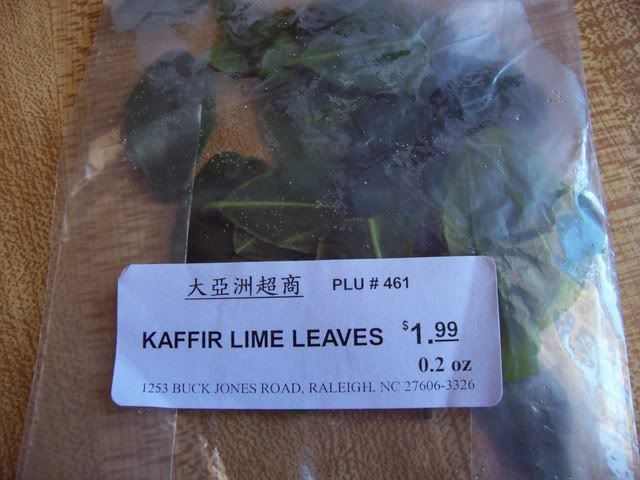
I went on a hunt for Kaffir Lime Leaves when I cooked Beef Rendang last month. I finally found it in a corner of the freezer section. This little bag of a few leaves was $1.99!
It's expensive because Kaffir, I don't think, is grown anywhere here in the U.S. This lime is native to Indonesia and Malaysia.
As for the taste, I'm not really sure. I think the beef rendang was the wrong dish to try this ingredient on if you were trying to see what flavor or essence it contributes to the dish. There were so many spices and aromatics in the beef rendang that none of them really stand out. I am guessing this contributed some acidity and essence to the dish. I'll have to try making my favorite Thai soup, Tom Yum Goong as it's another dish that kaffir leaves are used in.
Visit our new blogs:
Amoores.com
Cooked from the Heart - our new food blog
Our New Backyard - garden & photo blog
Found Not Lost - about all the things we 'find' worth talking about


While it is most probably used most for the color it imparts, turmeric is also known to have some medicinal properties and health benefits. It has antiseptic properties and is used on burns, cuts and bruises. It is also supposed to be good for digestive problems and can be made into teas. According the World's Healthiest Foods, turmeric is used in "Chinese and Indian systems of medicine as an anti-inflammatory agent to treat a wide variety of conditions, including flatulence, jaundice, menstrual difficulties, bloody urine, hemorrhage, toothache, bruises, chest pain, and colic." Visit the site to learn of other health benefits from turmeric. Some of the health conditions supposedly helped by turmeric may surprise you.
When I made Beef Rendang, I found this pack of fresh turmeric from the Asian market. It was for $0.99 and there were about ten pieces in the pack. I used another piece last night on a braised pork belly dish. The rest, I put in the freezer for later use.
Visit our new blogs:
Amoores.com
Cooked from the Heart - our new food blog
Our New Backyard - garden & photo blog
Found Not Lost - about all the things we 'find' worth talking about

The shallots in the above photo are the ones that look like small onions and are segmented like garlic once peeled. Note the difference with the garlic placed above them.
You can use onions and shallots interchangeably, but I usually reserve shallots for recipes that specifically call for them since they are also a little more expensive than onions. Used fresh, shallots taste almost like sweet vidalia onions. They are perfect for salads since they don't impart that strong oniony smell either.
The ingredients above were used in a dish I just made called beef rendang.
Visit our new blogs:
Amoores.com
Cooked from the Heart - our new food blog
Our New Backyard - garden & photo blog
Found Not Lost - about all the things we 'find' worth talking about
 My sister brought this small bottle of Colatura di Alici for me when she went to Italy. Did you know that early Romans made a fish sauce called Garum, made by fermenting fish such as anchovies, tuna or mackerell resulting in this amber liquid. This is how it is made in the Philippines too, we call this Patis, commonly known as fish sauce.
Is there are difference between this colatura and patis other than it costs ten times more? Not much, really. They both have a salty taste and a slightly briny aroma. Actually, this colatura is just slightly more fishy smelling than patis. Hard to believe if you've ever smelled patis. It is definitely an acquired taste if you're not used to it. Me, I use it for everything. My husband swears I've slowly poisoned him with patis. He didn't use to eat fish before he met me. He does now.
How to use it? I use it in anything that needs fish sauce. I even use it as a dipping sauce, cut with a spritz of lemon. On pastas, just drip a couple of drops just before finishing and you essentially knock the flavors up a notch. Try it next time you make linguini with clam sauce or shrimps with alfredo sauce and you'll love it. Try it also on fresh, vine ripened tomatoes; sliced sprinkled with a few drops of fish sauce and a few turns from the pepper cracker and you'll be in heaven.
Try it. You'll like it :)
Visit our new blogs:
Amoores.com
Cooked from the Heart - our new food blog
Our New Backyard - garden & photo blog
Found Not Lost - about all the things we 'find' worth talking about

My sister sent these tropical flavor extracts: banana, ube and langka. McCormick, known for their line of spices, developed this line for the Philippine market. The McCormick Extracts come in these flavors: Almond Extract (Pure), Banana Extract, Buco-Pandan Extract, Chocolate Extract, Lemon Extract, Mango Extact, Melon Extract, Nangka Extract, Orange Extract, Pandan Extract, Pineapple Extract, Strawberry Extract, Ube Extract, Vanilla Baking Extract & Vanilla Extract.
I haven't tried the langka or jackfruit extract yet. The banana flavor we've used to make tapioca pearl drinks or sago drink. All it is is water sweetened with raw sugar (brown sugar will do) with a slight banana flavor. Don't put too much of the extract as it is super concentrated and can make the drink too strong. Tapioca pearls are then added to the drink.
As for the ube, we've made purple ice cream by adding a couple of drops in vanilla icecream. It's not the same as our beloved ube ice cream, but if you just go by the looks of it, it could pass :) I'm thinking of experimenting with ube ice cream by using the frozen ube. I have some now so hopefully I'll get around to making it soon.
Visit our new blogs:
Amoores.com
Cooked from the Heart - our new food blog
Our New Backyard - garden & photo blog
Found Not Lost - about all the things we 'find' worth talking about
 When I make Lumpia (Filipino Eggrolls), I usually use a brand labeled as spring roll wrappers from the Asian market. However, the last time I had to make egg rolls for my nieces baby shower, I was out of the brand that I usually keep a stock of in the freezer and i didn't feel like making a trek to the Asian market 12 miles away. Instead, I settled for these wrappers found in the grocery store. They were in the refrigerated section where the tofu were.
Anyway, after buying five packs of them, I get them home and realize that these are the thicker ones, the kind you would use for making wontons; and if you were making large wontons, these would be perfect. But for making the delicate egg rolls or lumpia, they would not do at all. What you would end up with is something similar to the egg rolls at fast food Chinese restaurants at most food courts.
I didn't have a choice but use these, so what I did is to cut the wrappers in half on the diagonal, put a mere tablespoon of lumpia filling in, and made small packets. Instead of using all of the wrap and ending up with thick sections to the lumpia, I decided to fan out the excess on the sides and top.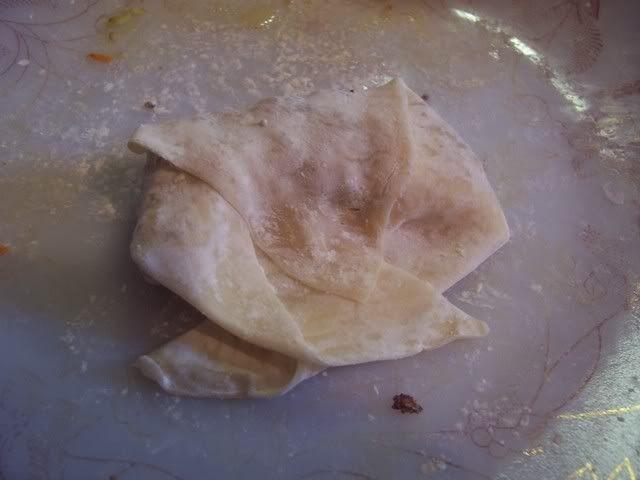 What I ended up with was an egg roll with a very crunch edge and was also decorative. I think everyone enjoyed it!
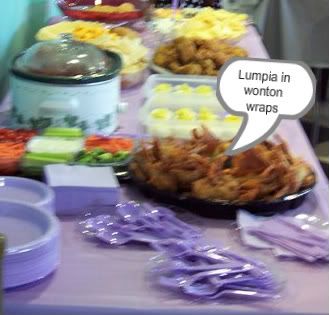
Unfortunately, we were running late again so I didn't have time to photograph the final product. Here it is on the table after we got to the party. The table got so crowded that I didn't get a good photo of these eggrolls there either!
Visit our new blogs:
Amoores.com
Cooked from the Heart - our new food blog
Our New Backyard - garden & photo blog
Found Not Lost - about all the things we 'find' worth talking about
 My grandmother's house in the Philippines was surrounded by banana trees. Aside from the fruits, my grandmother used various parts of the banana plant for different things.
Did you know that banana blossoms are edible? Check out this recipe for banana blossom. It has step by step photos of how to prepare the blossoms for cooking.
The leaves, has numerous uses. I call it the tinfoil of the rain forest. It can be used to wrap anything either for cooking, storage or transport. One of the most common uses is for wrapping food to be cooked. One of most common treats is suman, a rice cake wrapped and cooked in banana leaves. My grandmother made the best.
Even the trunk of the banana plant has its use. I remember the curved layers of the trunk used for food trenches. Pretty much like paper plates. Also, did you know that the trunk of a banana tree is not really a trunk in the usual sense in that it is made up of thick layers of leaves? Interesting huh?
Read all about bananas here.
There are a number of recipes online that use banana leaves. If you ever have need of some check your local hispanic or asian markets.
Visit our new blogs:
Amoores.com
Cooked from the Heart - our new food blog
Our New Backyard - garden & photo blog
Found Not Lost - about all the things we 'find' worth talking about
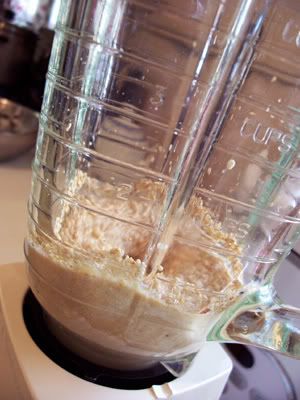 I don't know why the word Tahini always makes me want to dance. LOL!
Anyway, if you didn't know, Tahini is a sesame seed paste that is used as a condiment in many middle eastern and Mediterranean cooking. Some Asian cuisines also use tahini or sesame seed paste in addition to sesame oil that imparts that distinctly Chinese food aroma we have all grown accustomed to.
There are many brands of bottled sesame paste on the markets but it is so easy to prepare and the homemade version is so much better than anything you can buy, that why bother? Try making your own and you won't regret it. You won't go back to buying the bottled stuff ever again. It's also a whole lot cheaper when you make it yourself.
One thing to remember is that the oil in homemade sesame paste can go rancid pretty quickly. The bottled stuff keeps longer because of all the preservatives they put in there. So if you're making your own, save your left overs in the refrigerator and try to use it up within the week if you can. The good thing about this is, you can make a little bit at a time so you won't have too much left over. Just buy a bag of sesame seeds so you always have them on hand, and keep them in the freezer to keep them fresh tasting.
Click here to see how we made our own Tahini or sesame seed paste.
Visit our new blogs:
Amoores.com
Cooked from the Heart - our new food blog
Our New Backyard - garden & photo blog
Found Not Lost - about all the things we 'find' worth talking about
 If you cook, if you like to eat, you've probably come across sesame seeds. You can find sesame seeds in almost everything from hamburger buns to pastries to savory dishes. Some people don't like how they get stuck between your teeth but they all agree its nutty flavor is delicious and Chinese food just wouldn't be Chinese food without sesame oil!
Sesame seeds are a a good source of calcium, magnesium, iron, vitamin B1, phosphorus and zinc. What does this all mean, it means that sesame seeds is probably beneficial in preventing high blood pressure and is said to protect the liver from oxidative damage.  Sesame seeds can be quite expensive when you don't know where to look. Small one ounce jars of sesame seed at the grocery store can run you between $2-3. Instead of buying them in the cute jars, go to the Asian market instead and buy a bag. You can then transfer the contents into cute jars if you wish.
I bought the 10 oz. bag pictured above at an Asian market for $1.69. It had about 2 cups of sesame seeds in it which may be too much for most uses, but even if you end up having a whole bag left over, you still come out ahead price wise. If I know I won't be using them right away, I store extra sesame seeds in the freezer to keep them fresh. Just follow your usual methods of keeping out freezer burns and you should be alright.
If you want to know what to do with so much Sesame seeds, stay tuned and I'll have some recipes coming up.
Visit our new blogs:
Amoores.com
Cooked from the Heart - our new food blog
Our New Backyard - garden & photo blog
Found Not Lost - about all the things we 'find' worth talking about


